
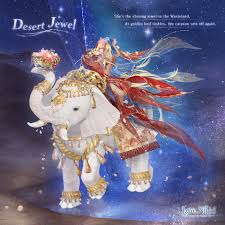
Desert Jewel
Desert Jewel, a mobile puzzle game developed by Le Nguyen Studio, invites players into an enchanting desert-themed adventure where matching colorful gems unlocks hidden treasures. Launched in 2023, this free-to-play Android game has captured attention with its vibrant visuals and classic match-3 mechanics, though it has faced criticism for technical issues. Part of the popular match-3 puzzle genre, Desert Jewel combines a simple yet addictive gameplay loop with an Arabian-inspired aesthetic, appealing to casual gamers and puzzle enthusiasts alike. This article explores the game’s origins, mechanics, appeal, challenges, and cultural impact, shedding light on its place in the mobile gaming landscape.

Origins and Concept
Desert Jewel emerged as part of the booming mobile gaming market, where match-3 games like Candy Crush Saga and Bejeweled have set a high standard. Released by Le Nguyen Studio, a developer focused on accessible puzzle games, Desert Jewel was designed to offer a fresh take on the genre with a desert adventure narrative. The game’s premise casts players as a “diligent wanderer” seeking mysterious treasures in an abandoned desert, evoking imagery of ancient ruins and hidden riches. Available on Google Play and platforms like APKCombo, it requires Google Play Games beta for Windows installation and adheres to standard mobile game terms of service.
The game draws inspiration from classic match-3 titles, incorporating familiar mechanics with a visually distinct theme. Its desert setting, complete with golden borders and luxurious jewels, taps into an exotic, treasure-hunting fantasy, reminiscent of Jewel Shuffle by Arkadium, which also uses an Arabian aesthetic. While Desert Jewel lacks the narrative depth of some competitors, its focus on accessibility and visual appeal makes it a compelling option for casual players.
Gameplay Mechanics
Desert Jewel follows the core match-3 formula: players swap adjacent jewels to align three or more of the same type, clearing them from the board to earn points and progress through levels. The game features a grid filled with colorful gems—amethysts, diamonds, emeralds, and rubies—set against a desert-themed backdrop. The mechanics are straightforward but grow in complexity across hundreds of levels. Key gameplay elements include:
- Basic Matches: Align three or more identical jewels horizontally or vertically to remove them.
- Special Combos: Matching four jewels creates a bomb that clears a group of gems, while matching five forms a special jewel that, when paired with a neighboring gem, eliminates all instances of that gem type on the board. Combining two special jewels triggers dramatic board-clearing effects.
- Boosters and Power-Ups: Players can use boosters to navigate tricky puzzles, though these are randomized and activate automatically, limiting strategic control.
- Level Progression: The game offers over 100 levels, with increasing difficulty and varied objectives, such as collecting specific gems or achieving target scores.
The interface is designed to be user-friendly, with smooth animations and vibrant effects that enhance the tactile satisfaction of matching gems. However, the game’s reliance on a progress bar and automatic board resets when no moves remain can feel restrictive, especially when players spot viable moves that the game overlooks.
Appeal and Challenges
Desert Jewel captivates with its luxurious aesthetic and match-3 simplicity, making it ideal for quick gaming sessions. The desert theme, accented by gold borders and sparkling jewels, creates an immersive atmosphere that evokes adventure and discovery. Its accessibility—no complex controls or steep learning curve—appeals to a broad audience, from children to adults seeking a relaxing pastime. The lack of move limits in some levels, unlike time-constrained match-3 games, reduces pressure and suits casual play.
However, Desert Jewel has faced significant criticism for technical issues. Players report frequent glitches, such as jewels disappearing, unresponsive controls, or the board freezing, particularly at higher levels like 99 on “easy” mode. These issues often force restarts, disrupting progress and frustrating players. The randomized boosters, which activate without player input, can feel unhelpful, and the game’s algorithm has been accused of blocking winning moves to extend playtime. Additionally, excessive pop-up ads and slow response times detract from the experience, with some players noting that gem colors blend into the background, reducing visibility. These flaws have led some to abandon the game, especially those playing for external rewards, like bonus points in reading apps.
Educational and Cognitive Benefits
Despite its challenges, Desert Jewel offers cognitive benefits typical of match-3 games. It sharpens pattern recognition as players identify potential matches and combos. The increasing difficulty encourages strategic thinking, as players must prioritize moves to maximize points or clear specific objectives. For younger players, the game reinforces spatial reasoning and problem-solving, as they navigate complex board layouts. The lack of a strict move limit in some levels fosters a low-pressure environment, ideal for building confidence in puzzle-solving.
In educational settings, Desert Jewel could serve as a supplementary tool for teaching logical reasoning and perseverance, though its glitches may limit classroom use. Parents may find it a fun, screen-based activity for kids, but adult supervision is recommended to address frustration from technical issues.
Cultural Impact and Community
Desert Jewel has a modest but growing presence in the mobile gaming community. Its release in 2023 sparked interest among match-3 fans, with downloads available through trusted platforms like Uptodown and APKCombo. However, negative reviews on Google Play highlight its technical shortcomings, with players urging developers to fix bugs like disappearing star discs or freezing boards. Despite these issues, the game’s vibrant design has drawn comparisons to Jewel Shuffle and Bejeweled, earning praise for its aesthetic appeal.

The game’s community is small but vocal, with players sharing experiences on forums and review platforms. Some appreciate its simplicity and lack of move limits, while others criticize its ad-heavy model and glitches. Unlike Love Nikki’s Desert Jewel suit, which inspired fan art and discussions on Reddit, the game lacks a strong cultural footprint but benefits from the broader match-3 genre’s popularity.
Conclusion
Desert Jewel offers a visually stunning and accessible entry into the match-3 genre, blending a treasure-hunting narrative with addictive puzzle mechanics. Its luxurious jewels and desert aesthetic create an engaging experience, but technical glitches, unresponsive controls, and intrusive ads hinder its potential. For casual players seeking a relaxing match-3 adventure, Desert Jewel holds promise, provided developers address its flaws. As the mobile gaming market evolves, Desert Jewel could shine brighter with updates, cementing its place as a gem in the crowded puzzle landscape.