

Brain Sokoban
Brain Sokoban is a classic puzzle game that has challenged and delighted players since its inception in the early 1980s. Renowned for its deceptive simplicity and profound cognitive demands, Brain Sokoban combines logic, spatial reasoning, and strategic planning in a way that captivates players of all ages. Available across platforms—from retro computers to modern smartphones—this game remains a staple in the world of brain games. This article explores the origins, mechanics, appeal, educational benefits, and modern relevance of Brain Sokoban, revealing why it continues to engage minds globally.
Origins and Evolution
Brain Sokoban traces its roots to 1982, when Hiroyuki Imabayashi created the original Sokoban in Japan. The name, meaning “warehouse keeper” in Japanese, reflects the game’s premise of maneuvering boxes in a storage facility. Initially released for the NEC PC-8801, Sokoban gained traction for its innovative puzzle design, spawning clones like Boxxle and Soukoban. By the 1990s, Brain Sokoban adaptations appeared on platforms like the Commodore 64, as noted in the Lemon64 database, and later on websites like Games 4 Brains, which offered downloadable levels and online versions.
The game’s evolution has been marked by its adaptability. Early versions used simple ASCII graphics, while modern iterations, like those on Poki or simple.game, feature vibrant visuals and mobile-friendly interfaces. Variations such as Coffee Break Puzzle, where players push donuts as a coffee cup, or Watermelon Sokoban, with fruit-themed challenges, add creative twists while preserving the core mechanics. These adaptations ensure Brain Sokoban remains accessible and fresh for new generations.
Gameplay Mechanics
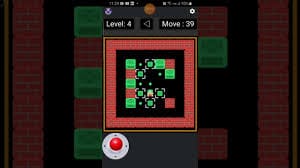
At its core, Brain Sokoban is a logic puzzle where players control a warehouse keeper tasked with pushing boxes onto designated storage spots. The game is played on a grid-based board, typically depicted as a warehouse with walls, floors, and targets. Using arrow keys or touch controls, players move the keeper up, down, left, or right, pushing one box at a time to its goal. Boxes cannot be pulled, and pushing them into corners or against walls can render a level unsolvable, demanding careful planning.
Each level presents a unique layout, with increasing complexity as players progress. Early puzzles might involve pushing a single box a few spaces, while advanced stages feature intricate mazes with multiple boxes and tight spaces. Some versions, like Sugabokku, introduce numerical challenges, requiring boxes to sum to specific values on switches, while Jelly Journey Pro adds obstacles like water gaps or spikes. The undo feature, common in many versions, allows players to backtrack, reducing frustration while maintaining the challenge.
The objective is straightforward: position all boxes on target spots to complete the level. However, the simplicity of the rules belies the game’s depth, as players must visualize multiple moves ahead to avoid trapping boxes. This makes Brain Sokoban a quintessential brain teaser, engaging both novice and seasoned puzzlers.
Why Brain Sokoban Captivates
Brain Sokoban’s enduring appeal lies in its elegant balance of accessibility and complexity. The game requires no prior knowledge, making it easy for beginners to start, yet its escalating difficulty keeps even puzzle enthusiasts engaged. The satisfaction of solving a tricky level—often after multiple attempts—creates a rewarding sense of accomplishment. Websites like CrazyGames and mindgames.com highlight Brain Sokoban as a top brain game, noting its ability to sharpen mental agility and problem-solving skills.
The game’s minimalist design, often featuring clean graphics and soothing sound effects, fosters focus and immersion. Its spatial reasoning challenges appeal to players who enjoy visualizing patterns, similar to solving a Rubik’s Cube or navigating a maze. The tactile nature of pushing boxes, whether via keyboard or touchscreen, adds a satisfying physicality to the digital experience. For mobile players, versions on simple.game support iOS and Android, ensuring smooth gameplay on the go.
Brain Sokoban also thrives on replayability. With thousands of user-created levels available on platforms like sokofun.de, players can explore endless configurations. Variations like Bunny Push, with its carrot-crate mechanics, or Sokofarm, with farming themes, keep the experience diverse and engaging.
Educational and Cognitive Benefits
Brain Sokoban is more than entertainment; it’s a powerful tool for cognitive development. The game enhances spatial reasoning, requiring players to mentally manipulate objects and predict outcomes. This skill is vital for fields like engineering, architecture, and computer science, where visualizing spatial relationships is key. Research cited on braingymmer.com suggests that brain games like Brain Sokoban improve logical reasoning and problem-solving, helping players tackle complex real-world challenges.
For children, Brain Sokoban fosters critical thinking and patience. Games like Snack Hop Puzzle teach young players to strategize within limited moves, promoting efficiency and foresight. In classrooms, teachers use Brain Sokoban to introduce concepts like planning and sequencing, aligning with STEM curricula. For adults, the game serves as a mental workout, reducing stress while boosting concentration and focus, as noted on memory-improvement-tips.com.
The game’s non-violent nature makes it suitable for all ages, and its single-player format encourages independent learning. Parents and educators value Brain Sokoban for its ability to engage kids without relying on fast-paced action or screen overload, offering a calm yet stimulating activity.
Cultural Impact and Modern Relevance
Brain Sokoban has left a lasting mark on gaming culture. Its influence is evident in the proliferation of Sokoban-inspired games, from indie titles on itch.io to professional releases on Steam. Online communities on platforms like Reddit share custom levels and strategies, while sites like gamesforthebrain.com feature Brain Sokoban alongside other mind games, reflecting its status as a cognitive classic.
The game’s accessibility has grown with HTML5 versions, playable on browsers without downloads, as seen on edge-surf.org. Mobile adaptations cater to modern audiences, with touch controls and vibrant graphics enhancing the experience. Despite its age, Brain Sokoban remains relevant, with recent updates like those on Poki ensuring compatibility with current devices.

Conclusion
Brain Sokoban is a testament to the enduring power of simple yet profound puzzles. Its blend of logic, spatial reasoning, and strategic depth makes it a standout in the realm of brain games. From its Japanese origins to its modern iterations, Brain Sokoban continues to challenge and inspire, offering a mental workout that’s both fun and rewarding. Whether you’re pushing boxes on a Commodore 64 or swiping watermelons on a smartphone, this timeless game proves that a clever mind is the ultimate tool for success.