
Morpheme
Language is a fascinating puzzle, and at its core lies the morpheme, the smallest unit of meaning in any language. Understanding morphemes—whether they are roots, prefixes, or suffixes—unlocks the structure of words, making vocabulary acquisition and comprehension more intuitive. A morpheme game is an engaging, interactive way to teach and learn these linguistic building blocks, transforming complex linguistic concepts into accessible and fun activities. This article explores the value of morpheme games, their types, benefits, and practical applications for learners of all ages.
What is a Morpheme?
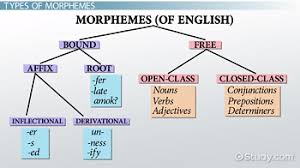
A morpheme is defined as the smallest grammatical unit in a language that carries meaning. For example, the word “unhappiness” contains three morphemes: “un-” (meaning not), “happy” (the root, meaning content), and “-ness” (indicating a noun form). Morphemes are categorized into two main types: free morphemes, which can stand alone as words (e.g., “book”), and bound morphemes, which must attach to other morphemes (e.g., “-s” for plurality or “un-” for negation). The study of morphemes, known as morphology, is critical for understanding how words are formed and how they relate to one another. Morpheme games leverage this concept to make learning dynamic and memorable.
The Concept of a Morpheme Game
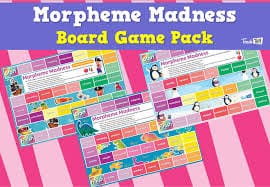
A morpheme game is an educational activity designed to teach players about morphemes by encouraging them to identify, combine, or manipulate these units to form words. These games can take various forms, such as card games, digital apps, word-building puzzles, or classroom activities. The goal is to make morphology interactive, helping learners—especially young students or non-native speakers—grasp how morphemes function in word formation. By turning learning into play, morpheme games foster engagement and retention, making them a powerful tool in language education.
Types of Morpheme Games
Word-Building Card Games
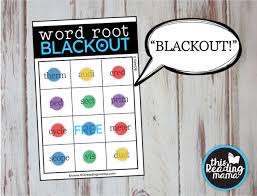
In a morpheme card game, players receive cards with individual morphemes—roots, prefixes, or suffixes—and must combine them to create valid words. For example, a player might combine “re-” (meaning again), “play” (the root), and “-ed” (past tense) to form “replayed.” This type of game encourages players to experiment with morpheme combinations, reinforcing their understanding of word structure.
Digital Morpheme Tools
Digital platforms, such as the Morpheme Mapper or apps from The Literacy Nest, offer interactive morpheme games where players input words to see their morpheme breakdowns or play matching games to pair morphemes with their meanings. These tools often include visual aids, like word matrices, to show relationships between words, making them ideal for tech-savvy learners.
Classroom Morpheme Challenges
In classroom settings, teachers can design morpheme games like “prefix hunts” or “suffix races,” where students identify morphemes in texts or compete to create the most words using a given root. For instance, using the root “act,” students might create “action,” “active,” or “actor.” These activities promote teamwork and critical thinking while deepening morpheme awareness.
Benefits of Morpheme Games
Enhancing Vocabulary
Morpheme games help learners decode unfamiliar words by recognizing familiar morphemes. For example, knowing that “bio” means life and “-logy” means study allows a learner to infer that “biology” is the study of life. This skill is particularly valuable for academic vocabulary, where complex words often combine Greek or Latin morphemes, such as “polynomial” (poly + nom + ial).
Improving Reading and Spelling
Understanding morphemes aids in phonics, as many morphemes retain consistent spellings despite pronunciation changes. For instance, the past tense suffix “-ed” is spelled the same in “jumped” and “wanted,” even though it sounds different. Morpheme games reinforce these patterns, improving both reading fluency and spelling accuracy.
Supporting Language Acquisition
For non-native speakers, morpheme games simplify language acquisition by breaking words into manageable parts. Recognizing common prefixes like “un-” or suffixes like “-ness” helps learners understand word relationships and form new words, accelerating their mastery of English.
Fostering Engagement
Games naturally engage players, and morpheme games are no exception. By incorporating elements of competition, creativity, or collaboration, these games make learning enjoyable, encouraging learners to explore morphology without feeling overwhelmed.
Practical Applications in Education
Morpheme games are versatile and can be adapted for various educational contexts. In primary grades, teachers can introduce basic morphemes like plural “-s” or past tense “-ed” through simple word-building activities. For older students, games can focus on derivational morphemes (e.g., “-ness” or “un-“) to explore how words change meaning or part of speech. In language arts classes, morpheme games can be paired with reading tasks to identify morphemes in texts, enhancing comprehension. For English language learners, these games provide a hands-on way to build vocabulary and confidence.
Tips for Designing Effective Morpheme Games
To create impactful morpheme games, consider the following:
- Start Simple: Begin with common morphemes like “un-,” “-s,” or “re-” to build confidence.
- Incorporate Context: Use morphemes in sentences or stories to show their real-world application.
- Use Visuals: Word matrices or charts can help visual learners see morpheme relationships.
- Balance Fun and Learning: Ensure the game is engaging but focused on educational goals.
- Adapt to Skill Levels: Tailor complexity to the learners’ age and proficiency, using more advanced morphemes like “geo-” or “-ology” for older students.
Challenges and Considerations
While morpheme games are highly effective, they have limitations. Some morphemes, like the prefix “in-,” have multiple meanings (e.g., “not” in “inactive” vs. “into” in “inbound”), which can confuse learners. Additionally, the meanings of some Greek or Latin roots have evolved, making literal translations less reliable. Teachers should guide students to check morpheme meanings against context and emphasize that not all morphemes follow strict rules.
Conclusion
Morpheme games offer a dynamic, engaging way to teach the building blocks of language. By breaking words into their smallest meaningful units, these games empower learners to decode complex vocabulary, improve spelling, and enhance language acquisition. Whether through card games, digital tools, or classroom challenges, morpheme games make morphology accessible and fun. As educators and learners embrace these activities, they unlock the power of morphemes, transforming language learning into an exciting and rewarding adventure.