
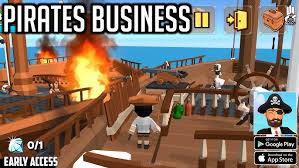
Pirates Business
The Pirates Business game is a captivating blend of strategy, economics, and adventure that transports players to the swashbuckling world of piracy. Set against the backdrop of the Caribbean during the golden age of piracy, this digital strategy game challenges players to build a pirate empire through cunning, trade, and naval prowess. Unlike traditional pirate-themed games that focus solely on combat or exploration, Pirates Business emphasizes economic management, resource allocation, and strategic decision-making, making it a unique addition to the genre. This article delves into the mechanics, themes, and appeal of the Pirates Business game, offering insights into why it has captured the imagination of strategy enthusiasts.

The Premise of Pirates Business
In Pirates Business, players assume the role of a fledgling pirate captain with a small ship and a handful of crew members. The objective is to rise from obscurity to become a feared and wealthy pirate lord, controlling trade routes, plundering rival ships, and establishing a network of illicit enterprises. The game’s open-world setting spans the Caribbean, including ports like Nassau, Port Royal, and Havana, each offering unique opportunities for trade, recruitment, and conflict. The core mechanic revolves around balancing risk and reward: players must decide whether to invest in legitimate trade, engage in piracy, or pursue a hybrid approach to amass wealth and influence.
The game’s narrative is driven by player choices, with no predetermined end. You can choose to align with colonial powers as a privateer, turn to outright piracy, or focus on building a trading empire. This flexibility ensures that each playthrough feels distinct, as economic and political systems shift dynamically based on your actions and random events, such as storms or rival pirate attacks. The Pirates Business game draws inspiration from classics like Sid Meier’s Pirates! but distinguishes itself with a deeper focus on economic strategy and resource management.
Core Mechanics of Pirates Business
The gameplay of Pirates Business is a rich tapestry of systems that require players to juggle multiple roles: captain, merchant, and strategist. At its heart is the economic system, where players manage resources like gold, provisions, and ship upgrades. Ports serve as hubs for trading goods such as rum, sugar, and spices, with prices fluctuating based on supply, demand, and regional events. For example, a naval blockade might spike prices in one port, offering a chance for savvy players to profit by smuggling goods.
Combat is another key pillar, blending tactical decision-making with action-oriented sequences. Players can engage in ship-to-ship battles, choosing to outmaneuver opponents with superior sailing tactics or board enemy vessels for hand-to-hand combat. The game tests hand-eye coordination during these sequences, but strategic choices—such as crew training or ship modifications—often determine the outcome. Unlike purely action-based pirate games, Pirates Business rewards foresight and preparation over reflexes alone.
The crew management system adds depth, as players must recruit, train, and maintain morale among their sailors. A disgruntled crew might mutiny, while a loyal one can turn the tide in battle. Additionally, players can invest in businesses like taverns or smuggling rings in ports, generating passive income but attracting the attention of colonial authorities or rival pirates. These mechanics create a delicate balancing act, where every decision carries weight and consequences.
Strategic Depth and Replayability
What sets Pirates Business apart is its strategic depth. The game’s dynamic world ensures that no two sessions are identical. Random events, such as pirate hunts or economic booms, force players to adapt their strategies. For instance, aligning with the Spanish Empire might grant access to lucrative trade routes, but it could also make you a target for English privateers. The Pirates Business game encourages players to think several moves ahead, anticipating how their actions will ripple through the game world.
Replayability is further enhanced by the game’s open-ended nature. Players can pursue different paths—becoming a ruthless pirate, a cunning merchant, or a diplomatic privateer. The aging mechanic adds a layer of urgency: as your character grows older, their health and combat prowess decline, eventually forcing retirement. This pushes players to achieve their goals within a limited timeframe, adding a narrative arc to the open-world experience.
Historical and Cultural Context
The Pirates Business game is steeped in the historical context of the 17th and 18th-century Caribbean. The game’s developers have drawn on real-world history to craft an authentic atmosphere, from the design of ships like sloops and frigates to the portrayal of colonial rivalries. Ports are bustling with period-appropriate details, such as merchants haggling over goods or sailors recounting tales of lost treasure. The game also incorporates educational elements, with in-game logs providing historical tidbits about piracy, trade, and naval warfare.
However, Pirates Business takes creative liberties to enhance gameplay. The inclusion of mythical elements, like cursed artifacts or sea monsters, adds a fantastical layer that appeals to players seeking a blend of history and adventure. This balance of realism and fantasy makes the game accessible to both history buffs and casual gamers.
Challenges and Criticisms
While Pirates Business has been praised for its depth, it’s not without flaws. Some players have noted a steep learning curve, particularly in mastering the economic systems and naval combat. The game’s interface, while functional, can feel cluttered, especially on lower-end devices. Additionally, the reliance on random events can sometimes frustrate players who prefer more predictable outcomes. The developers have acknowledged these issues and are actively incorporating player feedback through updates, a testament to the game’s ongoing evolution in its early access phase.
Why Pirates Business Stands Out
The Pirates Business game shines in its ability to merge the thrill of piracy with the intellectual challenge of economic strategy. It appeals to players who enjoy games like Civilization or Europa Universalis but crave a more action-oriented, narrative-driven experience. The game’s vibrant visuals, with detailed ship models and dynamic weather effects, enhance immersion, while the soundtrack—featuring sea shanties and orchestral scores—sets the mood for high-seas adventure.
For fans of the pirate genre, Pirates Business offers a fresh perspective by prioritizing strategy over spectacle. It’s not just about plundering ships but building a legacy, whether through wealth, infamy, or alliances. The game’s multiplayer mode, allowing up to nine players to compete for dominance, adds a competitive edge, making it ideal for those who enjoy testing their strategies against others.

Conclusion
In the crowded landscape of pirate-themed games, Pirates Business carves out a niche by blending economic strategy, tactical combat, and open-world exploration. Its dynamic world, rich historical flavor, and replayable gameplay make it a standout title for strategy enthusiasts and pirate fans alike. While it faces some challenges in accessibility and polish, the game’s ambition and depth suggest a bright future, especially as developers continue to refine it. Whether you’re hoarding gold, outwitting rivals, or sailing into the sunset, Pirates Business offers a thrilling journey on the high seas that’s well worth embarking on.