
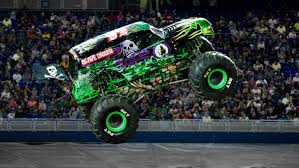
Monster Truck
Monster Truck games have captivated players for decades, delivering high-octane excitement, massive vehicles, and adrenaline-pumping action. These games replicate the raw power and spectacle of real-life monster truck events, allowing players to control towering vehicles as they crush cars, perform stunts, and race across challenging terrains. From their origins in the 1990s to modern simulations, Monster Truck games have evolved into a beloved genre that appeals to fans of racing, destruction, and extreme sports. This article explores the history, mechanics, and enduring appeal of Monster Truck games, highlighting key titles and their impact on gaming culture.
The Origins of Monster Truck Games
The Monster Truck gaming phenomenon began in the mid-1990s, coinciding with the growing popularity of real-world monster truck events like Monster Jam. One of the earliest and most iconic titles was Monster Truck Madness, released in 1996 by Terminal Reality and published by Microsoft. This PC game set the standard for the genre, featuring 12 monster trucks, including real-life vehicles like Bigfoot and Grave Digger. Players raced against AI opponents on tracks filled with checkpoints, shortcuts, and interactive objects, with the ability to modify trucks for different terrains in a virtual garage. The game’s realistic physics and innovative online multiplayer via modem or LAN earned it widespread praise and a massive following.
Following the success of Monster Truck Madness, its sequel, Monster Truck Madness 2 (1998), introduced improved graphics, new trucks, and variable weather conditions, further immersing players in the Monster Truck experience. The sequel also featured an online multiplayer mode on the MSN Gaming Zone, a pioneering feature for its time. The game was later ported to the Nintendo 64 as Monster Truck Madness 64, expanding its reach to console players. These early titles laid the foundation for Monster Truck games, blending realistic simulation with arcade-style fun.
Gameplay Mechanics in Monster Truck Games
Monster Truck games are defined by their unique gameplay, which combines racing, stunt performance, and vehicular destruction. Most titles center around controlling a massive truck—typically 10.5 to 12 feet tall, equipped with 66-inch tires and 1,500-horsepower engines—through various modes like racing, freestyle, and special events. Players must master complex mechanics, such as independent front and rear wheel steering, mass transfer in turns, and anticipating bounces after jumps, to succeed in competitive scenarios.
Racing modes often involve navigating dirt tracks or stadium arenas, with players competing against AI or human opponents. Tracks feature obstacles like ramps, mud pits, and crushed cars, requiring strategic driving and precise control. Freestyle modes, a staple of Monster Truck games, allow players to perform stunts like wheelies, donuts, and backflips in open arenas, earning points based on creativity and execution. Games like Monster Jam Showdown (2024) emphasize drift-heavy driving and stunts, with a focus on family-friendly fun and visually impressive damage effects.
Customization is another key feature, enabling players to tweak their trucks’ suspension, tires, and aesthetics to suit different tracks or personal styles. For example, Monster Truck Championship (2020) offers 16 customizable trucks and 25 arenas, challenging players to perfect their vehicles for drag races and freestyle competitions. Some games, like Monster Truck Destruction (2013), also incorporate in-game economies, where players earn cash for upgrades and repairs.
Evolution and Modern Monster Truck Games
Over the years, Monster Truck games have evolved with advancements in technology and gaming platforms. Early titles like Monster Truck Rally (1991) for the NES offered simple 2D racing and special events like car-crushing and tug-of-war. Modern games, however, leverage high-definition graphics, realistic physics engines, and expansive environments. Monster Jam Showdown, for instance, delivers a polished experience with over 120 events, though critics note its limited track variety and lack of a deep career mode.
Mobile and browser-based platforms have also embraced Monster Truck games, with titles like those on Poki and CrazyGames offering free-to-play experiences that require no downloads. These games cater to casual players, featuring simplified controls and quick sessions. Meanwhile, Monster Truck Driving on Math Playground integrates educational elements, blending fun with learning for younger audiences.
Despite their evolution, some Monster Truck games have faced criticism. Monster 4×4: Masters of Metal (2003), for example, was panned for repetitive gameplay and poor level design, with early builds promising features like pedestrian interactions that never made it to the final release. Such missteps highlight the challenge of balancing authenticity with engaging gameplay.
The Cultural Impact of Monster Truck Games
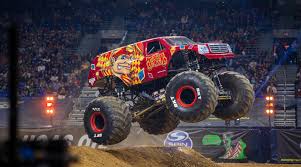
Monster Truck games reflect the larger-than-life appeal of monster truck culture, a subculture that has thrived since the 1970s. Real-world events like Monster Jam draw massive crowds with their spectacle of car-crushing and high-flying stunts, and games bring this excitement to living rooms and mobile devices. The genre’s popularity is fueled by its accessibility—appealing to both hardcore racing fans and casual players who enjoy the chaos of crushing cars or pulling off a “cyclone” (high-speed donut).
The inclusion of iconic trucks like Grave Digger, El Toro Loco, and Megalodon adds authenticity, as these vehicles are stars in their own right. Games often incorporate real-world drivers and announcers, like Army Armstrong in Monster Truck Madness, enhancing the immersive experience. For younger fans, Monster Truck games inspire creativity, with activities like coloring pages and toy truck brackets extending the fun beyond the screen.
The Future of Monster Truck Games
As technology advances, Monster Truck games are poised to become even more immersive. Virtual reality and augmented reality could offer first-person perspectives from the driver’s seat, while improved physics engines might enhance the realism of truck handling and environmental interactions. Developers could also introduce deeper career modes, livery editors, and open-world elements to address criticisms of repetitive gameplay.
The enduring appeal of Monster Truck games lies in their ability to capture the raw power and spectacle of monster trucks. Whether racing through mud, soaring over ramps, family-friendly genre continues to thrill players of all ages, ensuring its place in gaming culture for years to come.